

How to Clean Your Awning: A Step-by-Step Care Guide for Coastal Homes
Autor: Laura Jorge
6 Minute(s) to read / 10.8.2026


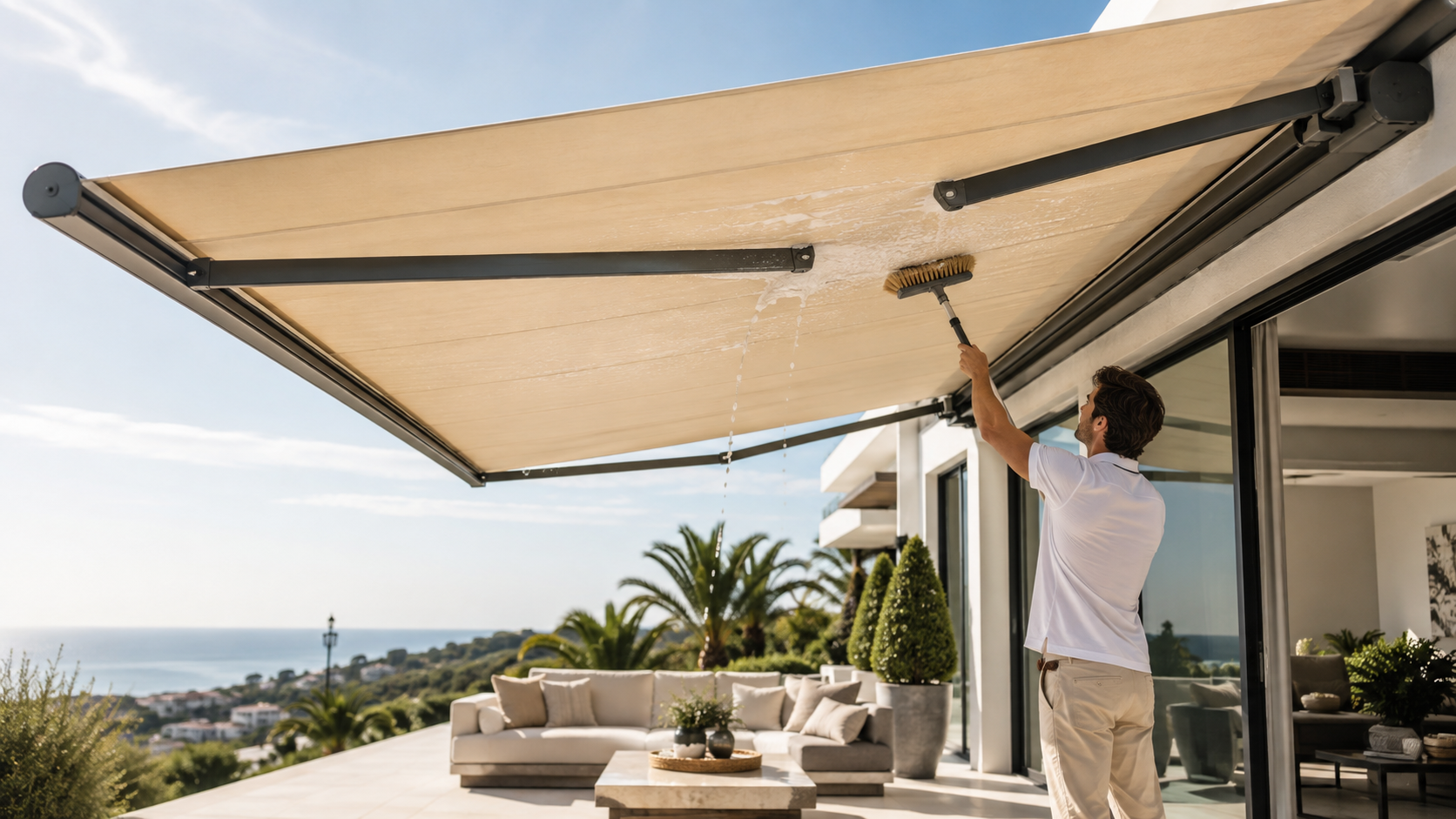
Knowing how to clean your awning is one of the simplest ways to protect an outdoor space. The method is straightforward: brush off loose debris, rinse with clean water, apply a mild soap solution with a soft brush, rinse again and leave the fabric fully extended until it is completely dry. Repeat it a few times a year and dust, pollen, salt and bird droppings never get the chance to become permanent stains. Below is the full process, plus the specific points to watch on retractable systems, pergolas and parasols in a Mediterranean coastal climate.
Why Awning Cleaning Matters in a Coastal Climate
A long sunny season is exactly what makes a terrace usable — and exactly what puts outdoor fabric under pressure. Intense UV radiation, humidity, sea salt, airborne dust, pollen and the occasional heavy storm all leave residue behind.
Left alone, that residue works its way into the fibres. Once dirt is embedded, gentle cleaning no longer removes it, and the temptation is to reach for stronger products — which is where most fabric damage happens. Light, regular maintenance is always easier than a rescue operation.
There is an aesthetic argument too. On a well-designed terrace, a grey, streaked awning undermines the look of the entire outdoor area.
Know Your Awning Fabric Before You Start
Not every awning is cleaned the same way. The main fabric families are:
- Solution-dyed acrylic: the premium standard, with excellent colour and UV retention.
- Polyester: more affordable, with performance that varies a lot by quality and finish.
- PVC and coated fabrics: harsh products can strip the protective coating.
- Technical performance textiles: advanced stain, water and UV finishes that need approved cleaners only.
The manufacturer's care sheet is always the reference. At Arte del Lusso we identify the exact fabric reference before recommending any product, because a cleaner that is safe for acrylic can ruin a coated surface.
What You Will Need
- A soft-bristled brush (never a wire brush)
- A bucket and clean water
- Mild soap or a manufacturer-approved fabric cleaner
- A soft sponge for spot work
- A garden hose with a gentle spray setting
- A safe, stable ladder if the awning is high
- A clean cloth for metal components
How to Clean Your Awning Step by Step
1. Pick the right day
Choose a dry, mild day with little wind. Early morning or late afternoon beats midday in summer, when the sun dries soap onto the fabric before you can rinse it off. You also need enough daylight left for the fabric to dry.
2. Brush off loose dirt first
Remove dust, leaves, cobwebs and pollen with a dry soft brush. Skipping this step turns loose dust into mud as soon as water hits it. Pay attention to seams, edges and the underside.
3. Inspect while you are up there
Look for tears, loose stitching, damaged seams, mildew marks, water pooling and loose fixings. If something is already damaged, have it assessed before scrubbing it.
4. Rinse with clean water
Use a gentle spray to loosen surface dirt. Never point a pressure washer at the fabric, the seams or the mechanism — high pressure can open stitching and strip protective coatings.
5. Apply a mild soap solution
Work in manageable sections with a soft brush or sponge, using cool or lukewarm water. Let the solution sit briefly, then work gently. Concentrate on the lower edge, areas under trees and spots hit by roof runoff. No solvents, no degreasers, no unapproved bleach, no hot water.
6. Rinse thoroughly, then dry fully extended
Rinse until the water runs completely clear — leftover soap attracts dirt and dries into visible marks. Then leave the awning open until every fold and seam is dry. Retracting damp fabric is the single most common cause of mould and musty smells.
How to Clean Your Retractable Awning: Cassette, Arms and Motor
Retractable systems need attention beyond the fabric. When working out how to clean your awning if it is a cassette or folding-arm model, extend it fully first so you can reach the whole surface and the hardware behind it.
Wipe the cassette, arms, brackets and hinges with a damp cloth and dry them, especially near the coast where salt builds up on aluminium and fixings. Keep the roller area free of leaves and grit so the fabric rolls in clean.
For motorised units, keep water away from the motor housing, sensors and wiring. Slow movement, unusual noises or irregular retraction should be checked by a technician rather than lubricated at random.
How to Clean Your SunSetter Awning or Another Branded System
Branded systems such as SunSetter, and premium fabrics like Sunbrella or Dickson, publish their own care instructions — and they differ on details such as mildew treatment and diluted bleach. The safe route is to find the exact fabric reference on the cassette or the original invoice, then follow that manufacturer's sheet rather than a generic tutorial. The mechanical steps above still apply to almost every branded retractable model.
Cleaning Pergolas and Parasols: What Changes
Bioclimatic pergolas, louvred roofs and large parasols follow the same logic with a few differences. On pergolas, clear the gutters and channels first: blocked drainage causes staining and water marks far more often than dirty fabric does. Clean aluminium profiles with a damp cloth and a neutral product, and check that louvres rotate smoothly.
Parasols should be cleaned open, then closed only once bone dry. Store them in a breathable cover rather than plastic, which traps humidity against the fabric.
How Often Should You Clean It?
- Every few weeks in season: brush off leaves, dust and debris.
- Monthly in spring and summer: rinse the fabric with clean water.
- Seasonally: full inspection plus spot-cleaning of stains.
- Every two to three years: a deeper clean, depending on exposure and manufacturer guidance.
Properties near the sea, under trees or exposed to heavy dust need the shorter end of every interval.
Mistakes to Avoid
Harsh chemicals, high-pressure washing, aggressive scrubbing, retracting wet fabric, ignoring small stains and cleaning without checking the fabric type. Each one shortens the life of an awning far faster than the weather does.
FAQs
Can I use a pressure washer on awning fabric?
No. It can break stitching, distort the weave and damage coatings. A hose on a gentle setting is enough.
How do I remove mould or mildew?
Treat it early with the product your fabric manufacturer specifies. Persistent mildew on large or valuable fabric is best handled professionally.
Do I need to remove the fabric to clean it?
Usually not. Cleaning in place, fully extended, is the standard approach and avoids the risk of refitting errors.
When should I call a professional?
When the unit is very large or hard to reach safely, when staining is extensive, when there is visible mould, or when the motor or structure is not behaving normally.
Final Thoughts
Learning how to clean your awning properly comes down to four habits: remove dry debris often, clean gently, rinse completely and never retract wet fabric. Done consistently, premium fabric keeps its colour and tension for years, even in a salt-heavy coastal environment.
At Arte del Lusso, outdoor shading is treated as both design and performance — from bespoke awnings to pergolas, parasols and made-to-measure solar protection systems. If your awning needs an expert inspection or a professional clean, get in touch with the Arte del Lusso team and we will assess fabric, frame and mechanism together.